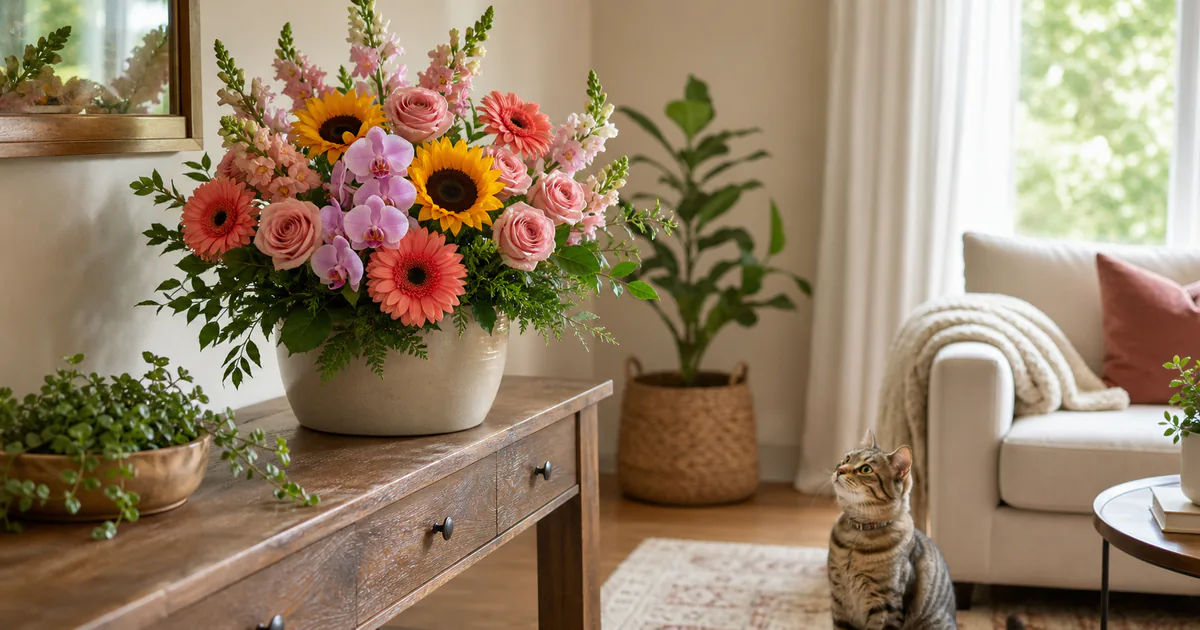
Quick answer: Prevent stains by removing mature anthers before loose pollen drops, working over an easy-to-clean surface, and keeping lilies away from fabric and food-preparation areas. If dry pollen lands on fabric, do not rub it deeper into the fibers; lift loose material first and follow the garment's care label.
Critical warning for cat households
True lilies and daylilies can cause fatal kidney failure in cats. The FDA states that stems, leaves, flowers, pollen, and even vase water can be dangerous. The safest choice is not to bring Lilium or Hemerocallis species into a home with cats.
Know which part produces the pollen
The powdery material sits on the anther at the end of each slender filament inside the flower. As a lily opens, its anthers mature and the pollen becomes easier to transfer. Removing an anther early can reduce staining, but cutting petals or the central pistil is unnecessary.
How to remove lily anthers with less mess
- Prepare the area. Move the vase to a hard, washable surface away from upholstery, rugs, and clothing.
- Wait until the bloom opens. The anthers should be accessible, but act before they shed visible loose powder.
- Use a tissue or disposable glove. Hold the anther itself and lift it away without brushing it against a petal.
- Discard it immediately. Fold the tissue inward and place it in a closed trash container.
- Wash your hands and tools. Check the tabletop and vase exterior for residue.
Do not shake the bloom, blow on the pollen, or carry the removed anther across the room uncovered. If anthers are already dusty, it may be safer to leave the arrangement in place and protect the surrounding surface while you work.
What to do when pollen reaches fabric
- Keep the affected area dry at first and avoid rubbing or wiping.
- Gently shake loose pollen outdoors, or lift surface particles with clean adhesive tape.
- Check the care label before applying any cleaner or water.
- For delicate, valuable, or dry-clean-only fabric, stop and take it to a professional cleaner.
- Do not apply a clothes dryer or other heat until the mark is gone.
Different dyes and fibers react differently, so test any stain treatment on an inconspicuous area. Upholstery, silk, wool, and vintage fabrics deserve professional advice rather than aggressive home treatment.
Safer placement for a lily arrangement
- Use a stable vase that cannot be brushed against easily.
- Keep the blooms away from curtains, pale walls, table linens, and frequently used walkways.
- Place a washable mat beneath the arrangement while flowers are opening.
- Remove fallen petals and anthers promptly.
- Keep the vase away from children and food-contact surfaces.
If a cat may have contacted a lily
Treat possible contact with a true lily or daylily as urgent. Do not wait for symptoms and do not attempt a home remedy. Contact a veterinarian or pet poison control center immediately, and bring the plant label or a clear photograph if possible. The FDA specifically includes pollen exposure and drinking vase water among the risks.
Sources and related guides
For safer alternatives, read how to choose safer flowers for cats. For potted plants with “lily” in the name, see our separate peace lily care guide; peace lilies are not true lilies but still present a different toxicity risk.