How to Care for Peace Lilies: Watering, Light, and Soil Requirements
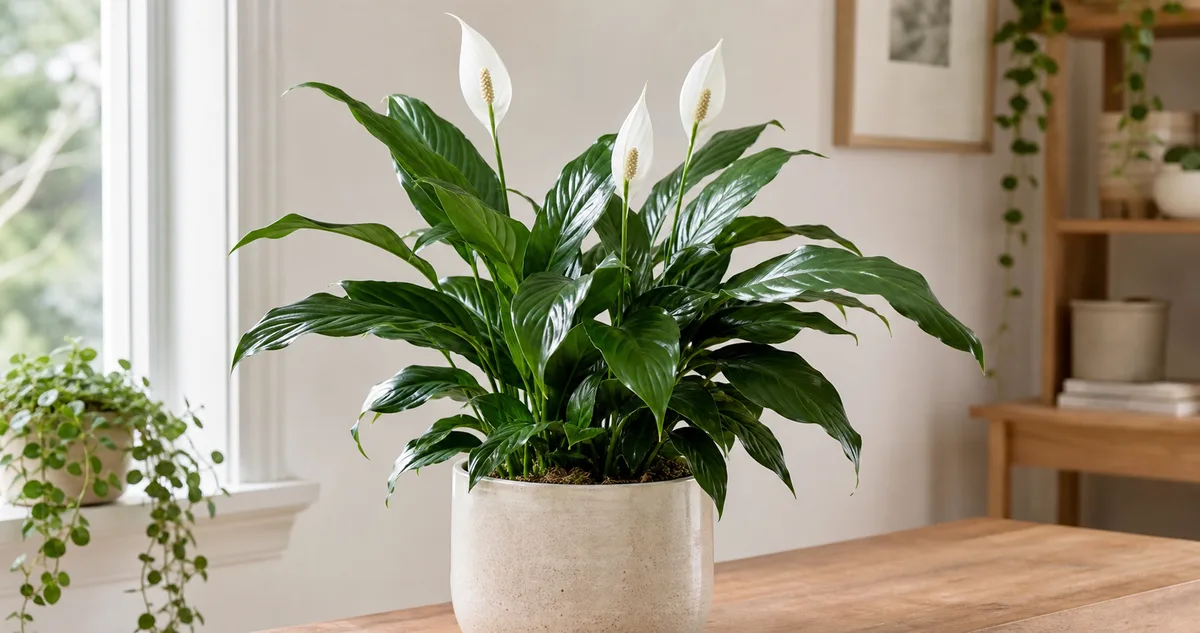
Peace Lilies (Spathiphyllum) are incredibly popular house plants because of their elegant white sail-like flowers (spathes) and deep green foliage. They are highly expressive plants, dramatically drooping their leaves when they need water, making them excellent companions for beginners and seasoned plant lovers alike.
Peace Lily Care Snapshot
Give peace lilies bright indirect light, evenly moist but not soggy soil, and a pot with drainage. They are forgiving plants, but they decline quickly when left in standing water.
Essential Selection & Care Instructions
1. Provide Bright, Indirect Sunlight
In their native tropical rainforests, Peace Lilies grow under the forest canopy. They thrive in bright, indirect sunlight. Direct afternoon sun will scorch their leaves, causing yellowing and brown spots. They can tolerate low light levels, though they are less likely to produce their signature white flowers in darker spaces.
2. Water When Leaves Begin to Droop Slightly
Peace Lilies prefer consistently moist but well-drained soil. The easiest way to water is to wait until the leaves begin to show a slight droop. When this happens, water the plant thoroughly until moisture drains out of the bottom of the pot. Avoid letting the roots sit in stagnant water, which leads to root rot.
3. Choose a Well-Draining Potting Mix
Use a potting soil amended with plenty of perlite or orchid bark to ensure excellent aeration and drainage. Repot your Peace Lily every 1 to 2 years, upgrading to a container that is 2 inches larger in diameter to give the roots space to expand.
4. Read the Leaves Before You Water Again
A peace lily that droops once and perks up after watering is communicating thirst. A plant that droops while the soil is wet may be dealing with root stress, poor drainage, or an oversized pot that stays wet too long. Check the top inch of soil and the weight of the pot before adding more water.
5. Encourage Blooms Without Burning the Leaves
Low light may keep the plant alive, but it often reduces flowering. Move the plant closer to a bright window where it receives filtered light rather than direct afternoon sun. If leaves bleach, yellow, or develop crispy patches, move it farther from the glass or add a sheer curtain.
6. Repot Only When the Plant Needs It
Peace lilies can tolerate being slightly root-bound. Repot when roots circle the pot, water runs straight through, or growth stalls despite good light and watering. Choose a pot only one size larger; too much extra soil can hold water around the roots and increase rot risk.
💡 Solving Brown Tips
Brown tips on Peace Lily leaves are usually caused by tap water chemicals (like chlorine and fluoride) or dry indoor air. Use distilled or filtered water, and mist the leaves regularly or place a tray of water and pebbles underneath to boost humidity.
⚠️ Critical Pet Toxicity Warning
Peace lilies are not true lilies, but the ASPCA lists them as toxic to cats and dogs because they contain insoluble calcium oxalates. Keep them away from pets that chew leaves, and contact a veterinarian if a pet bites or swallows the plant.