How to Preserve a Wedding Bouquet: 6 Methods Compared
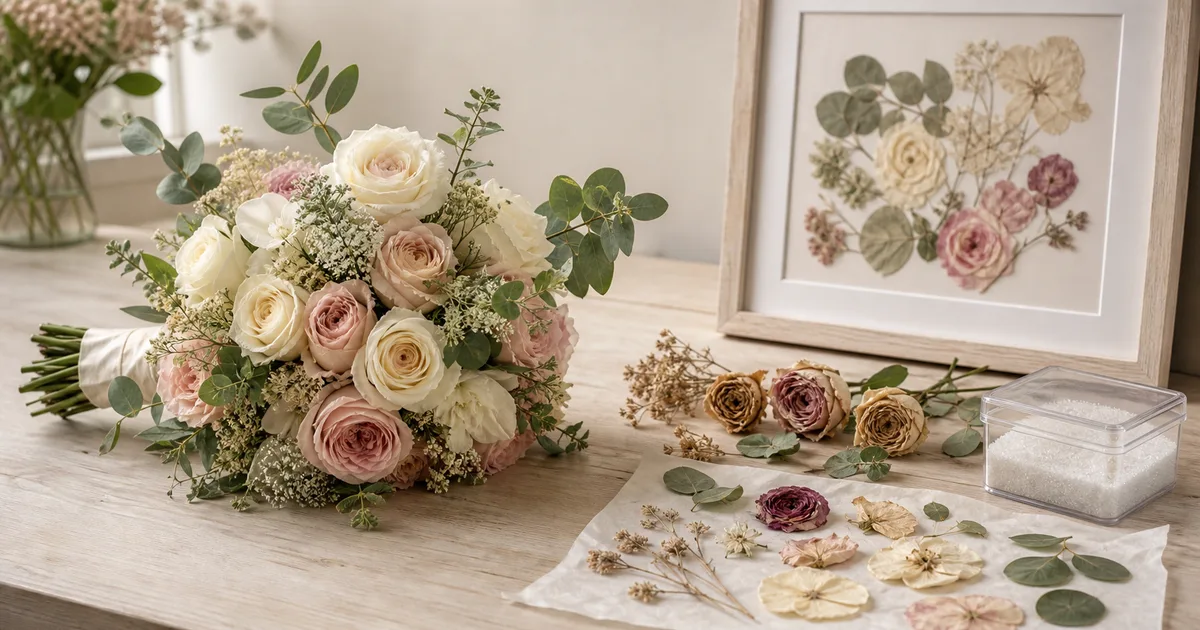
Wedding bouquet preservation works best when you choose the outcome before the flowers begin to wilt. Air drying keeps a three-dimensional silhouette but changes color and texture. Silica gel can retain more of a bloom's shape. Pressing creates a flat keepsake. Freeze-drying and complex resin work usually belong with an experienced professional.
This is a decision guide for saving a bridal bouquet—not a duplicate of our general how to dry flowers at home guide, which provides detailed DIY drying steps.
Quick answer: what to do first
Before the wedding, assign one person to protect the bouquet after photos and confirm whether a preserver needs it shipped or delivered promptly. After the ceremony, keep it out of direct sun and heat, maintain hydration until preservation begins, photograph the original design, and remove bruised or decaying material. Do not wait for visible mold or collapse before choosing a method.
Can Every Wedding Bouquet Be Preserved?
Most bouquets can yield a keepsake, but not every flower will retain its original form or color. Condition at the start matters: crushed petals, browning edges and water damage remain visible after drying. A mixed bouquet may need more than one method, such as silica-dried focal flowers plus pressed foliage.
- Sturdy, layered blooms: roses, zinnias and similar shapes can be candidates for silica gel when handled carefully.
- Flat or delicate material: small flowers, leaves and individual petals are often easier to press than a thick whole bloom.
- Dense or water-rich blooms: may dry unevenly and deserve a test bloom or professional assessment.
- Sentimental details: ribbon, bouquet charms and clean paper tags should be removed and stored separately before wet or dusty work.
If you are still planning the arrangement, use the bouquet stem-count guide to document ingredients and ask the florist for the flower list. Knowing the varieties helps a preserver choose methods.
Wedding Bouquet Preservation Methods Compared
| Method | Finished form | DIY level | Main tradeoff |
|---|---|---|---|
| Air drying | Dimensional, rustic bouquet | Accessible | More shrinking, darkening and shape change |
| Silica gel | Separate dimensional blooms | Moderate | Requires careful burial, timing and dust control |
| Pressing | Flat frame, card or album art | Accessible | Original 3D bouquet shape is lost |
| Resin | Block, tray or ornament | Advanced | Flowers must be fully dry; mixing and curing introduce safety and quality risks |
| Freeze-drying | Dimensional display | Professional | Specialized equipment, handling and service lead time |
| Professional mixed-media | Shadow box, frame or custom object | Professional | Quality, style, schedule and policies vary by provider |
1. Air Drying
Air drying is the simplest route when you want to keep a recognizable bouquet silhouette and accept a muted, antique appearance. Separate an overly dense bouquet into smaller bunches so air can move around the flowers; hang them in a dark, dry, ventilated area. The existing air-drying tutorial covers preparation and setup in detail.
Choose it for a rustic shadow box or vase display. Avoid treating the finished bouquet as unbreakable: dried stems and petals become brittle, and the original wedding-day color is not guaranteed.
2. Silica Gel Drying
Flower-drying silica gel is a granular desiccant that supports petals while removing moisture. University of Missouri Extension recommends an airtight container for this method because exposed silica absorbs moisture from the surrounding air. Individual flower heads are generally easier to support than an intact hand-tied bouquet.
- Photograph the bouquet and select the best blooms.
- Follow the drying product's label; place and cover each bloom gently so petals remain positioned.
- Seal the container and use the flower-specific timing supplied by the product or a reliable guide.
- Uncover slowly and use a soft brush to remove grains without tearing dry petals.
Do not improvise heating or reactivation instructions. Products differ, and some indicator formulations require specific handling. Minimize dust, protect eyes, keep the material away from children and pets, and follow the package safety directions.
3. Pressing
Pressing is a strong choice when the final goal is a framed composition, wedding album insert or card rather than a three-dimensional bouquet. Disassemble the arrangement, record its shape, and press flowers in a single layer. Thick blooms can be difficult to flatten evenly; individual petals or thinner parts of the design may work better.
Our flower pressing guide explains the book method. Keep names, dates and layouts on separate notes—do not write directly on fragile plant material.
4. Resin Preservation
Resin can turn dried bouquet pieces into a paperweight, tray or ornament, but casting is not a way to dry fresh flowers. The flowers need to be fully dry first. Moisture, trapped air, unsuitable molds and incorrect mixing can spoil a sentimental piece, so test the entire process with non-sentimental flowers before using wedding blooms.
NIOSH advises reading the label and safety data sheet for epoxy or resin systems, increasing ventilation, and using the right protective equipment; glove material must match the product. If you are pregnant, trying to conceive or breastfeeding, NIOSH recommends avoiding mixing epoxies and resins yourself. Complex or irreplaceable pieces are better assigned to a professional.
5. Freeze-Drying
Freeze-drying removes moisture under controlled freezing and vacuum conditions. University of Missouri Extension describes it as a several-day process requiring expensive equipment and best left to professionals. It can preserve a dimensional appearance more effectively than basic air drying, but it still does not make natural color permanent.
Contact providers before the wedding. Ask how quickly they need the bouquet, which flowers they accept, how the bouquet should be packed, whether shipping delays are covered, and what happens if a flower is already bruised or unsuitable.
6. Professional Preservation
A professional may combine drying, pressing, reconstruction and framing rather than use one method for the whole bouquet. Evaluate the provider's documented work on bouquets similar to yours—not only close-up social photos.
- Confirm the exact finished dimensions, frame or mold material and background color.
- Ask which original flowers will be used and whether replacements are ever introduced.
- Read intake deadlines, shipping instructions, damage limits, cancellation terms and revision policy.
- Request a written timeline, total price and list of optional charges before sending the bouquet.
- Keep your own photos and inventory of flowers, ribbon and keepsakes.
Cost, Time and Difficulty
DIY air drying and pressing usually need the least specialized equipment. Silica gel adds consumable material and more hands-on care. Resin adds molds, chemical handling and a higher failure cost. Freeze-drying and custom frames add professional labor, equipment, shipping and design decisions. Because provider pricing and lead times change, request a current written quote instead of relying on an old online range.
Do not choose only by speed. The correct question is whether the method produces the form you want and matches the flower condition, your tolerance for color change, your handling skills and the value of the bouquet.
Which Method Works for Each Flower Type?
| Flower characteristic | Method to consider | Why | Test first? |
|---|---|---|---|
| Open roses and sturdy layered blooms | Silica gel or professional dimensional preservation | Petal support can help retain shape | Yes, especially for pale or bruised petals |
| Small flat flowers and foliage | Pressing | Fits a flat composition with fewer thick layers | Yes, to check color change |
| Lavender, statice and airy fillers | Air drying | Often suits a naturally dry, textural finish | Useful but not always essential |
| Thick, waxy or very water-rich blooms | Professional assessment | Uneven drying and browning are harder to control | Strongly recommended |
| Mixed bouquet with many flower types | Combination method | Each ingredient can use the method that suits its structure | Yes |
Pet and Chemical Safety
- Identify every flower before leaving plant material where pets or children can reach it. The ASPCA toxic and non-toxic plant database is a useful starting point.
- Wear eye protection and control dust when handling granular desiccants; follow the product label instead of relying on a generic recipe.
- For resin, use the manufacturer's specified ventilation and personal protective equipment. “Low odor” does not prove that exposure is safe.
- Keep drying containers, resin components, tools and discarded petals away from food-preparation areas.
- If someone or a pet may have been exposed, use the product label or plant identification when contacting poison control, a clinician or a veterinarian.
How to Display the Preserved Bouquet
No preservation method makes flowers everlasting. Natural pigments and plant tissue continue to change. The Canadian Conservation Institute notes that visible light can permanently fade botanical specimens and that reducing light exposure is the practical control. Keep the display away from direct sunlight and strong spotlights, and avoid damp locations or repeated humidity swings.
Use a deep frame or case that does not crush the flowers, support the arrangement from stable points, and dust the exterior rather than brushing fragile petals repeatedly. Take a good photograph of the finished piece so the wedding-day colors remain documented even as the physical bouquet ages.
Wedding Bouquet Preservation FAQ
How do I preserve a wedding bouquet after the ceremony?
Keep it shaded, cool and hydrated until you can begin. Photograph it, remove damaged material, then choose air drying for a dimensional rustic result, silica gel for better shape retention, pressing for a flat frame, or a professional service for freeze-drying or complex resin work.
Can every bridal bouquet flower be preserved the same way?
No. Thin flowers often press well, sturdy blooms may respond to silica gel, and thick or water-rich petals can be harder to dry evenly. A mixed bouquet may need more than one method.
Should flowers be dried before resin casting?
Yes. Resin casting is not the drying stage. Fully dry the flowers, test with non-sentimental material, and follow the resin manufacturer's label and safety data sheet—or use an experienced professional.
Will a preserved bouquet keep its original color forever?
No. Drying changes color and texture, and later light exposure can cause more fading. Keep the display out of direct sunlight, strong heat and damp conditions.
When should I book a professional bouquet preserver?
Contact providers before the wedding so you understand intake timing, packing, shipping, flower limitations and design choices. Do not assume every provider can accept a wilted bouquet after a delay.
Sources and Methodology
LumoRose compared household methods with extension guidance and separated professional processes from DIY advice. Outcomes vary with species, cultivar, freshness, humidity, handling and display conditions; the page therefore avoids permanence guarantees and fixed service prices.
- University of Missouri Extension: Drying Flowers and Foliage for Arrangements
- CDC/NIOSH: About Epoxies and Resins and Reproductive Health
- Canadian Conservation Institute: Light, Ultraviolet and Infrared
- Canadian Conservation Institute: Caring for Natural History Collections
Last reviewed: July 18, 2026. This guide is educational. Follow product labels and professional instructions for the exact materials and flowers you use.
Continue with more flower care guides, compare event planning in our bridal shower flower guide, or review the full DIY steps in How to Dry Flowers at Home.