How to Fertilize Indoor Flowers and Houseplants for Max Blooms
Indoor plants live in limited potting soil. Over months of watering, the soil's natural nutrients leach out, leaving plants hungry. Proper fertilizing replenishes these vital minerals, promoting lush leaves and encouraging plants to produce beautiful flowers.
🌸 Ready-to-Bloom Flower Gifts
Send a gorgeous, professionally nurtured plant that is ready to bloom. We recommend ordering from UrbanStems for high-quality, beautifully curated floral gifts.
Essential Selection & Care Instructions
1. Understand NPK Ratios for Flowering Plants
Fertilizers display three numbers representing Nitrogen (N) for leaves, Phosphorus (P) for roots and flowers, and Potassium (K) for overall cellular strength. For indoor flowering plants, choose a fertilizer with a higher middle number (Phosphorus) to stimulate buds.
2. Dilute Fertilizer to Half Strength
Most manufacturer instructions are formulated for outdoor plants under full sun. For indoor plants, always dilute liquid fertilizer to half or a quarter of the recommended strength. Too much fertilizer will cause fertilizer burn, damaging delicate roots.
3. Apply Only During the Growing Season
Only feed your plants during active growth (spring and summer). Never fertilize in winter when plants are semi-dormant, as they cannot absorb the nutrients. The excess salts will accumulate in the soil, leading to root damage.
💡 Flush the Soil
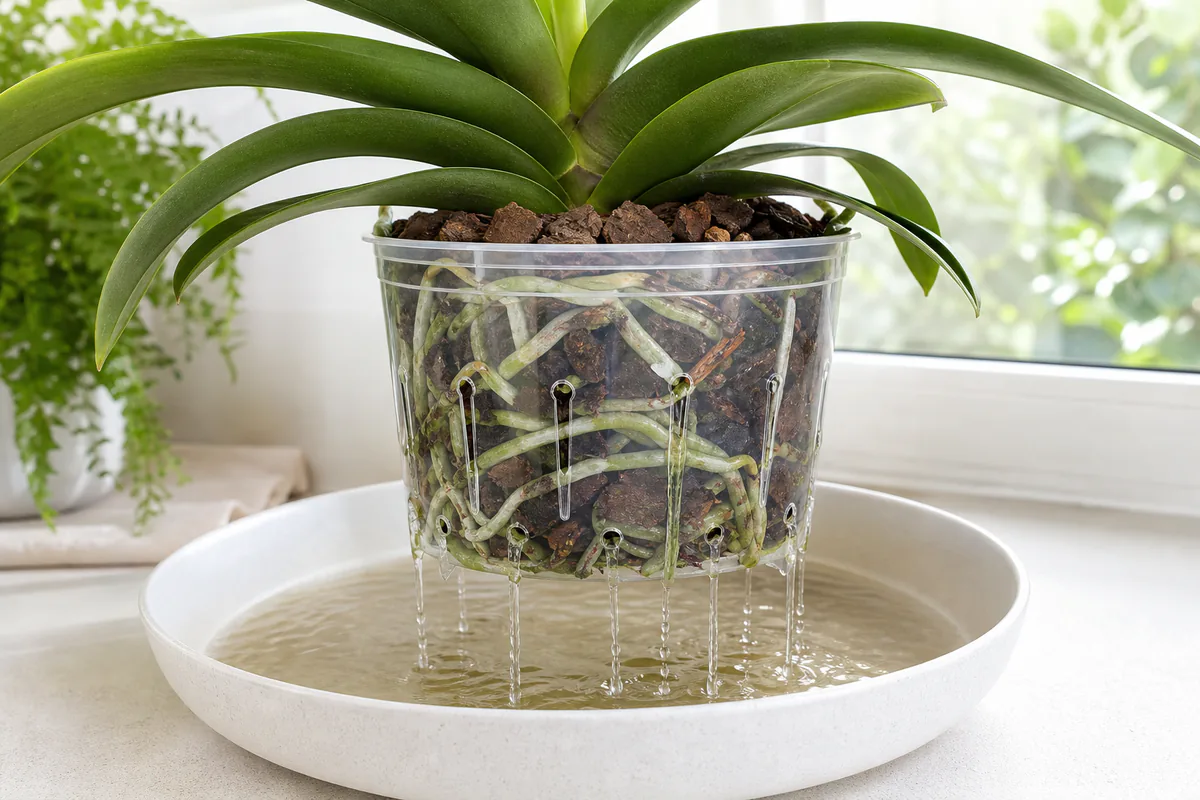
Once every few months, run clean water through your plants' pots until it drains freely out the bottom for a few minutes. This flushes away white mineral salt build-ups on the soil surface and container edges.
⚠️ Keep Fertilizer Away from Pets
Commercial fertilizers are highly toxic if ingested by pets. Organic fertilizers like bone meal or fish emulsion have strong smells that attract dogs and cats, causing vomiting, diarrhea, and pancreatitis. Store them securely.
When Not to Fertilize
Fertilizer is not medicine for a stressed plant. Skip feeding if the plant is wilting from dry soil, sitting in soggy mix, recovering from pests, or adjusting to a new room. Feeding during stress can burn tender roots and make diagnosis harder. Fix light, water, drainage, and pest issues first.
Most indoor flowering plants need less fertilizer in winter because growth slows with shorter days. Use a diluted balanced fertilizer during active growth, then reduce or pause once flowering ends. If white crust appears on the soil or pot rim, flush the mix with plain water and let it drain completely before the next normal feeding.
Simple Feeding Log
- Record the date, product, and dilution each time you feed.
- Watch new leaves for pale color, burnt edges, or distorted growth.
- Never exceed the label rate to force faster blooms.
Final Check Before You Act
If you are unsure whether a plant is hungry, wait for active new growth before feeding. Light and watering corrections often improve flowering more than extra fertilizer, especially in low-light rooms.