How to Care for Potted Phalaenopsis Orchids: Easy Indoor Steps
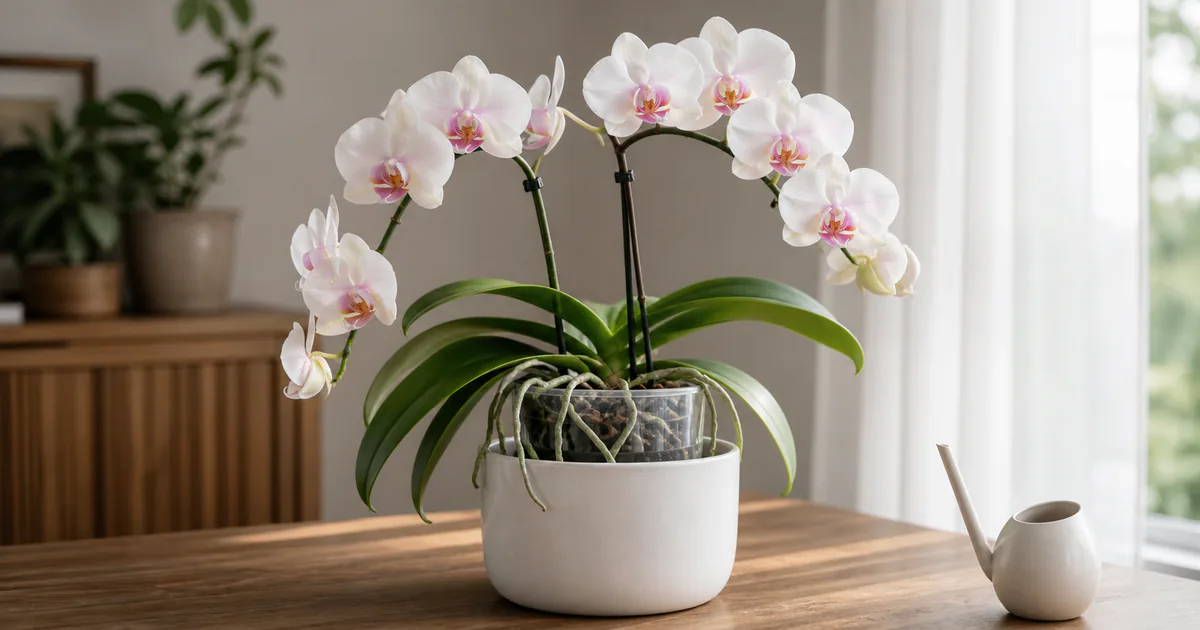
Phalaenopsis orchids, commonly known as moth orchids, are beautiful structural indoor plants that can hold their blooms for months. While they look exotic and high-maintenance, they are actually highly resilient plants once you understand their unique epiphyte nature—they grow on trees in the wild, not in dense soil.
🌸 Send a Potted Orchid Gift
For healthy, double-spiked orchids potted in elegant modern ceramic containers, order from UrbanStems. They provide excellent packaging to keep these delicate stems safe during transit.
Essential Selection & Care Instructions
1. Use the Soak-and-Drain Watering Technique
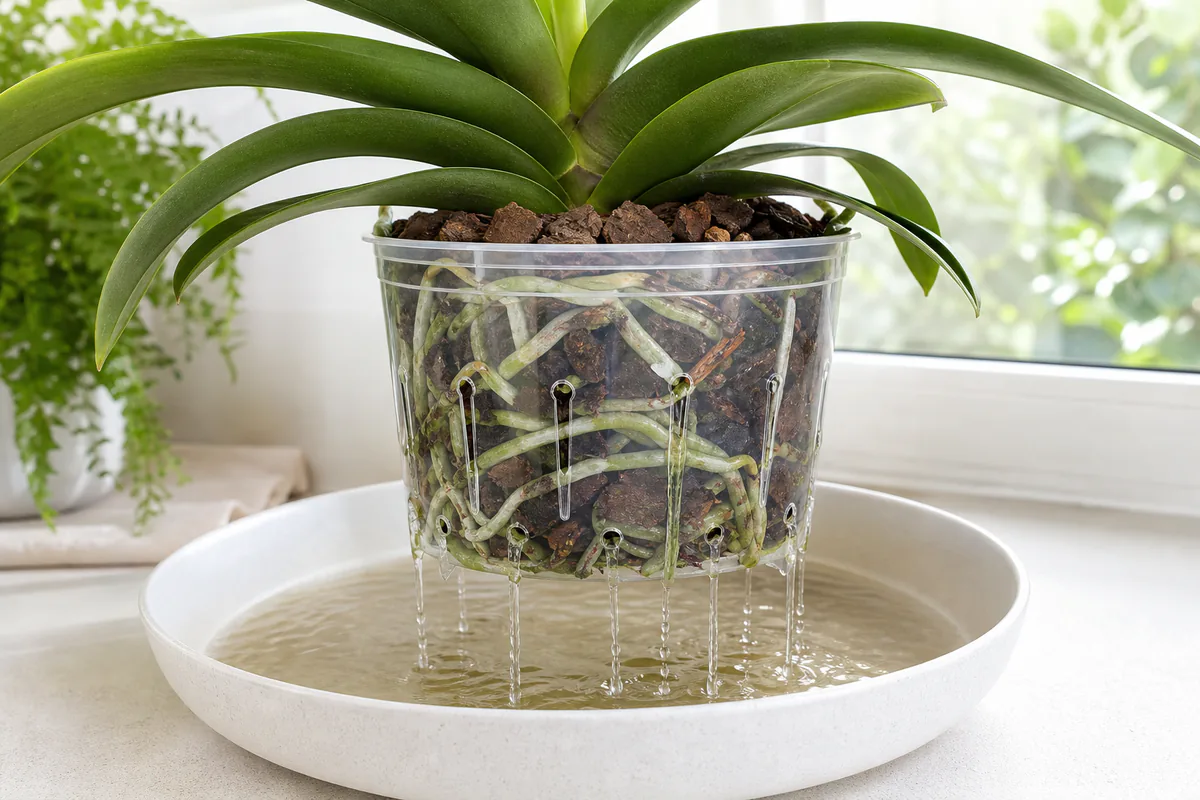
Overwatering is the number one killer of orchids. Instead of watering daily, water your orchid once a week by placing the grow pot in a sink and running lukewarm water through the bark mixture for 1 minute. Let it drain completely before replacing it in its decorative pot. Never allow water to pool in the crown where the leaves meet, as this causes crown rot.
2. Provide Bright, Filtered Light
Orchids need plenty of light to bloom, but direct sun will burn their leaves. An east-facing windowsill is ideal. Check the leaf color: healthy leaves are a bright olive green. Dark green leaves mean the plant needs more light, while yellow or reddish leaves indicate too much sun.
3. Fertilize Weakly, Weekly
During the active growing season, feed your orchid with a balanced orchid fertilizer diluted to one-quarter strength every time you water. Flush the potting mix with clean water once a month to wash away accumulated mineral salts.
💡 How to Get Reblooms
Once your orchid drops its flowers, don't throw it away! Cut the flower spike back to the highest active node (about 1 inch above the joint). Keep the plant in a room that is slightly cooler at night (a 10°F drop) to stimulate a fresh flower spike.
🐱🐶 Potted Orchid Pet Safety
Phalaenopsis orchids are completely safe and non-toxic to cats and dogs. You can display these gorgeous blooms on low coffee tables or desks without worrying about pet poisoning, though we still suggest keeping them out of reach to protect the delicate stems.
After-Bloom Orchid Care
When the last flower drops, do not assume the orchid is dying. Leaves and roots are the long-term health indicators. Keep watering only when the bark mix is nearly dry, and wait to fertilize until the plant is actively growing. A green flower spike can be trimmed above a node, while a fully brown spike should be removed near the base with clean snips.
Repot if the bark smells sour, breaks down into fine particles, or stays wet for many days. Choose a snug orchid pot and coarse bark rather than dense potting soil. Healthy roots are firm and green or silvery; hollow brown roots can be trimmed away during repotting.
Rebloom Conditions
- Give bright indirect light without hot direct sun on the leaves.
- Allow a modest nighttime temperature drop when possible.
- Avoid moving the plant repeatedly once buds begin forming.