How to Choose Get Well Soon Flowers: Hospital Guidelines
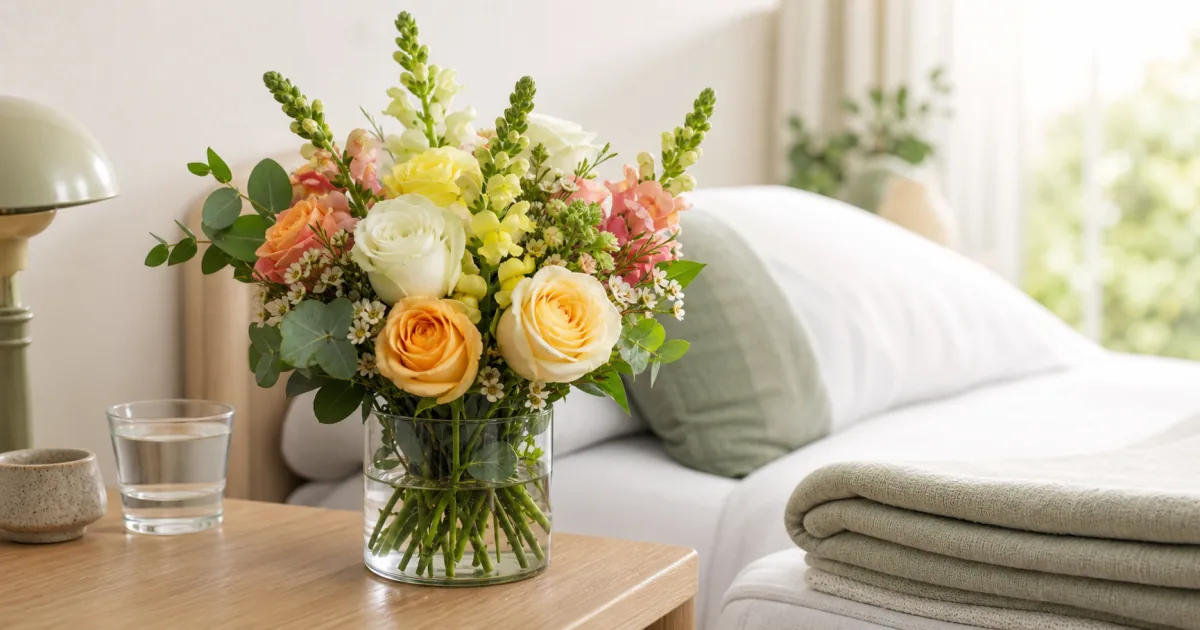
A bright bouquet of flowers is a wonderful way to lift someone's spirits during recovery. However, sending flowers to hospitals or recovery homes requires caution regarding fragrances, allergies, and hospital guidelines.
🌸 Send Get Well Wishes
Compare three cheerful, pre-vased products from local-florist networks. Before ordering to a hospital, confirm that the unit accepts flowers and ask about fragrance, pollen, and container restrictions.
Get-Well Flower Products to Compare
These products are selected for their cheerful presentation and ready-to-display containers, not as a permanent quality ranking. Confirm current stems, hospital acceptance, ZIP-code availability, and final price before ordering.
Be Happy® Bouquet with Roses
Teleflora
A cheerful mix of yellow roses and daisy spray chrysanthemums delivered in Teleflora's reusable Be Happy mug. The compact, ready-to-display format can work for a bedside table when the hospital permits fresh flowers.
Pros
- Arrives arranged in a reusable mug
- Bright, compact presentation
- Hand-delivered by a local florist
Cons
- Exact blooms and mug availability can vary locally
Be Happy Bouquet
FTD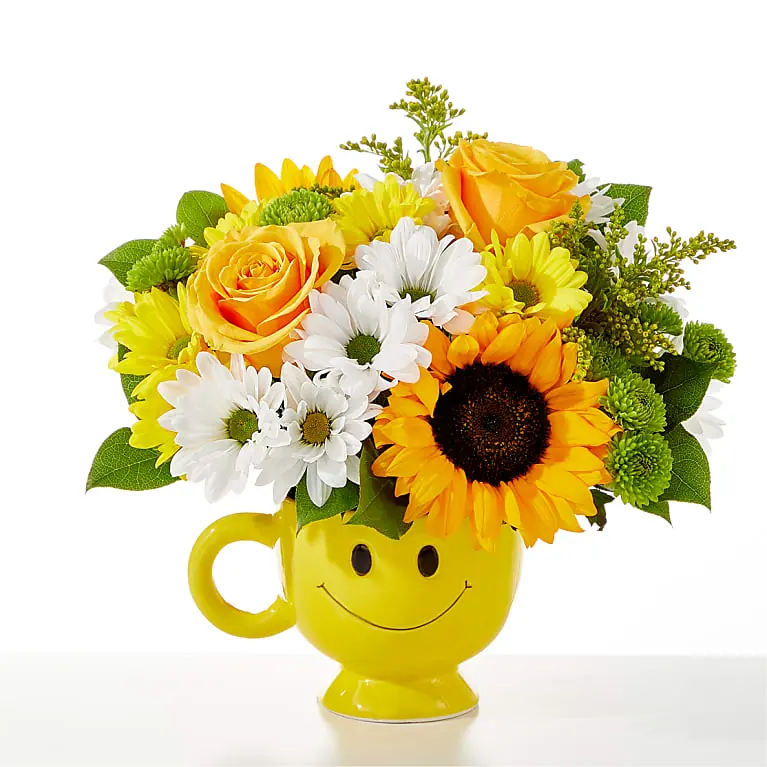
FTD's sunny mug arrangement combines roses, daisies, sunflowers, and solidago. It is designed as a lighthearted pick-me-up and arrives arranged by a florist, subject to local availability.
Pros
- Ready-to-display florist arrangement
- Cheerful yellow palette
- Same-day service may be available
Cons
- Flower substitutions and delivery fees depend on location
Fields of Europe® Get Well
1-800-Flowers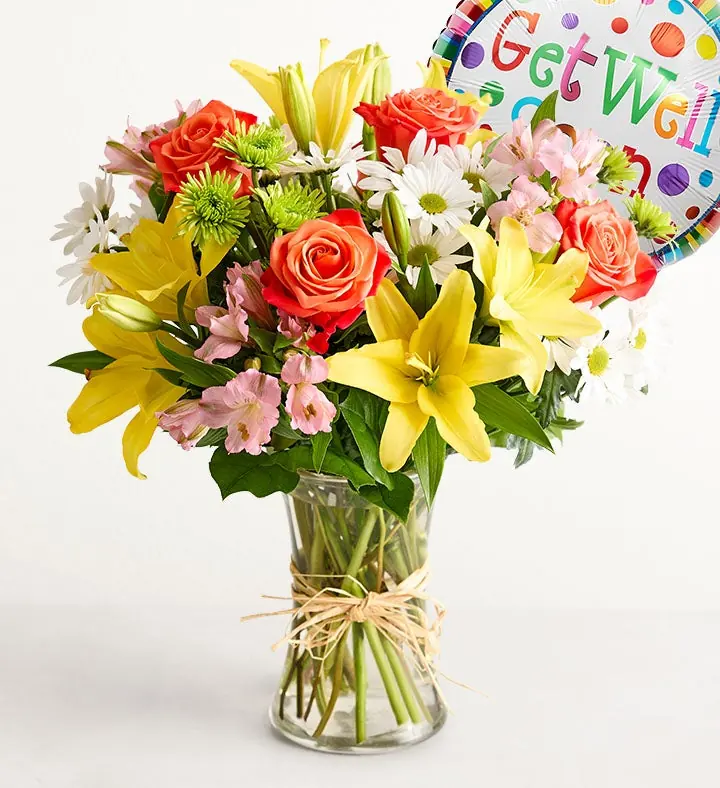
A colorful European-market-inspired arrangement paired with a get-well balloon. It is an explicit recovery gift for home delivery or for a hospital that confirms it can receive flowers and balloons.
Pros
- Get-well message is clear on arrival
- Balloon and arranged flowers are bundled
- Local florist hand delivery where eligible
Cons
- Contains lilies; avoid for cat households and fragrance-sensitive settings
Essential Selection & Care Instructions
1. Avoid Strongly Scented Flowers
Hospitals are enclosed spaces, and patients may have heightened sensitivities or respiratory issues. Avoid strongly scented flowers like lilies, lilacs, or hyacinths. Choose low-fragrance blooms like hydrangeas, roses, or ranunculus.
2. Ask About Pollen and Fragrance Sensitivities
No flower is guaranteed not to trigger symptoms. For a pollen- or fragrance-sensitive recipient, ask about personal triggers, favor a compact low-fragrance design, and request that the florist avoid visibly pollen-heavy stems. The CDC notes that pollen exposure can cause allergy symptoms and worsen asthma in susceptible people.
3. Check Hospital Delivery Policies
Many intensive care units (ICUs) or burn wards prohibit fresh flowers due to infection risks. Always call the hospital ahead of time to verify their policies and ensure the patient's room can receive deliveries.
💡 Vase Inclusion
When sending get-well flowers, always select an arrangement that comes pre-arranged in a vase. Hospital rooms rarely have spare vases, and patients won't be able to cut and style stems themselves.
🐱🐶 Recuperation Home Pet Safety
If the patient is recovering in a home with cats, avoid true lilies and verify every flower and foliage species before ordering. Roses, sunflowers, and Phalaenopsis orchids can be lower-risk starting points, but substitutions and added greenery still require checking.